Client
Architecture Foundation
Services
Brand Identity
Exhibiton Graphics
Exhibition Design
Emergent Practices in South Asia: Translating dense academic research into a spatial experience that speaks to the next generation of architects.
Overview :
Emergent Practices in South Asia is a research-led travelling exhibition curated by Rahul Mehrotra, Devashree Shah, and Pranav Thole as part of the State of Architecture in South Asia project. Where the previous edition (Dec 2023) spotlighted 41 practices and their work, this iteration was a significant evolution — broader in scope, richer in data, and far more ambitious in intent. Expanding to 78 emerging architectural practices across the region, all working in the public realm, the project posed critical questions: Does architecture matter in a condition of transition? What does the practice of architecture in the region mean for the next generation?
Held at IFBE Mumbai, a vast, raw industrial venue — the challenge was twofold: give the exhibition a visual identity energetic enough to draw a younger audience, and design an information environment that could make complex, region-wide research legible, engaging, and worth sitting with.
Held at IFBE Mumbai, a vast, raw industrial venue — the challenge was twofold: give the exhibition a visual identity energetic enough to draw a younger audience, and design an information environment that could make complex, region-wide research legible, engaging, and worth sitting with.
Emergent Practices in South Asia: Translating dense academic research into a spatial experience that speaks to the next generation of architects.
Overview :
Emergent Practices in South Asia is a research-led travelling exhibition curated by Rahul Mehrotra, Devashree Shah, and Pranav Thole as part of the State of Architecture in South Asia project. Where the previous edition (Dec 2023) spotlighted 41 practices and their work, this iteration was a significant evolution — broader in scope, richer in data, and far more ambitious in intent. Expanding to 78 emerging architectural practices across the region, all working in the public realm, the project posed critical questions: Does architecture matter in a condition of transition? What does the practice of architecture in the region mean for the next generation?
Held at IFBE Mumbai, a vast, raw industrial venue — the challenge was twofold: give the exhibition a visual identity energetic enough to draw a younger audience, and design an information environment that could make complex, region-wide research legible, engaging, and worth sitting with.
Held at IFBE Mumbai, a vast, raw industrial venue — the challenge was twofold: give the exhibition a visual identity energetic enough to draw a younger audience, and design an information environment that could make complex, region-wide research legible, engaging, and worth sitting with.
Client
Architecture Foundation
Services
Brand Identity
Exhibiton Graphics
Exhibition Design
(VISUAL IDENTITY)
We evolved the identity from the previous edition, retaining what was working while pushing it further to match the ambition of this iteration and resonate with a younger audience.
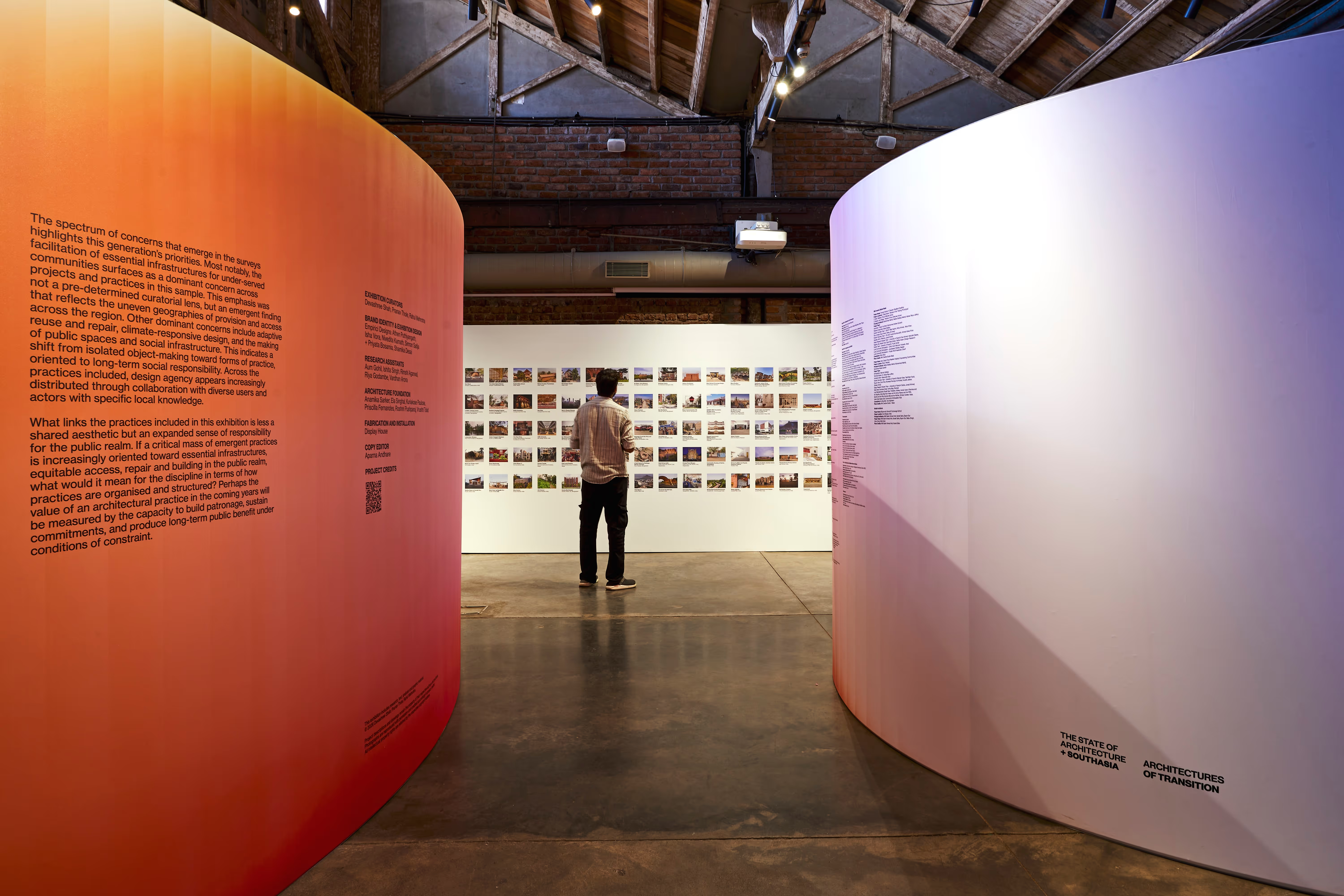
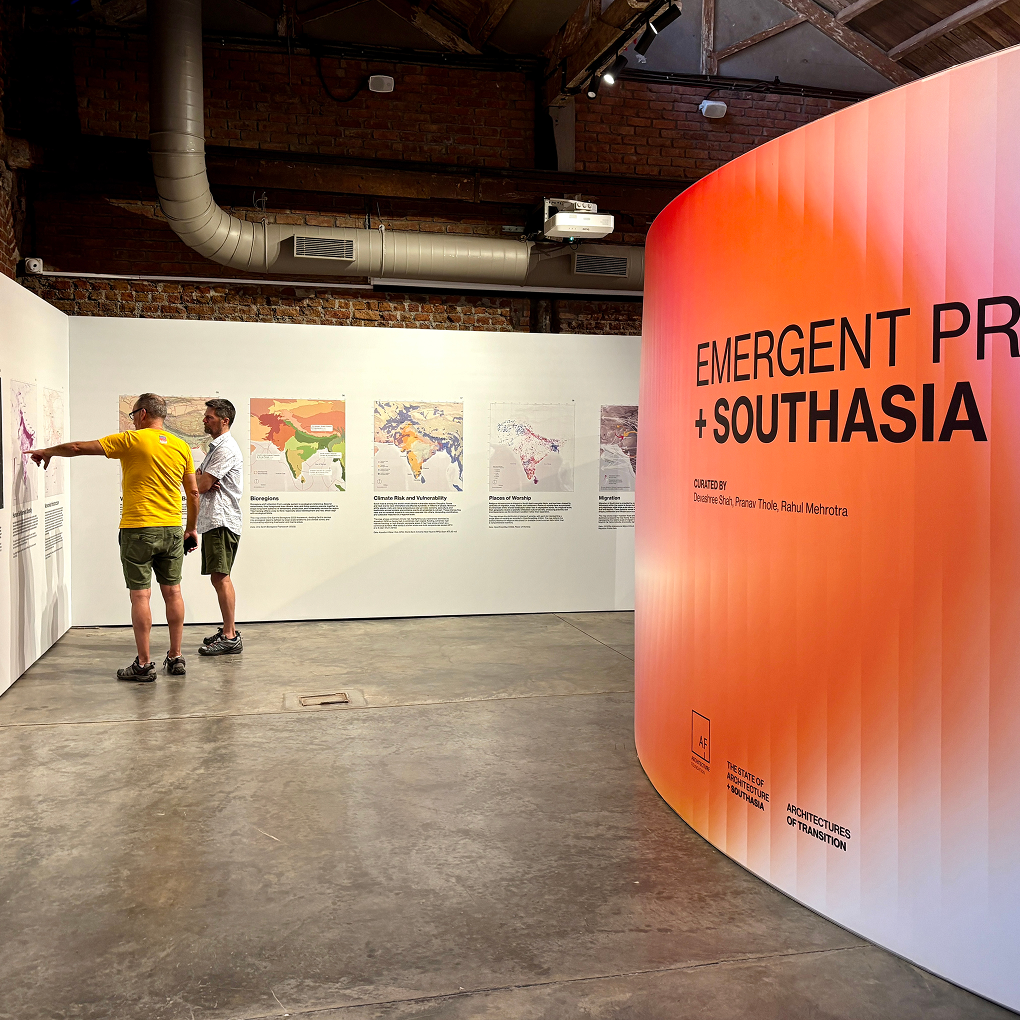
The gradient language carried over, but the palette was sharpened and elevated: more vibrant, more alive, and deliberately chosen to resonate with the word emergent.
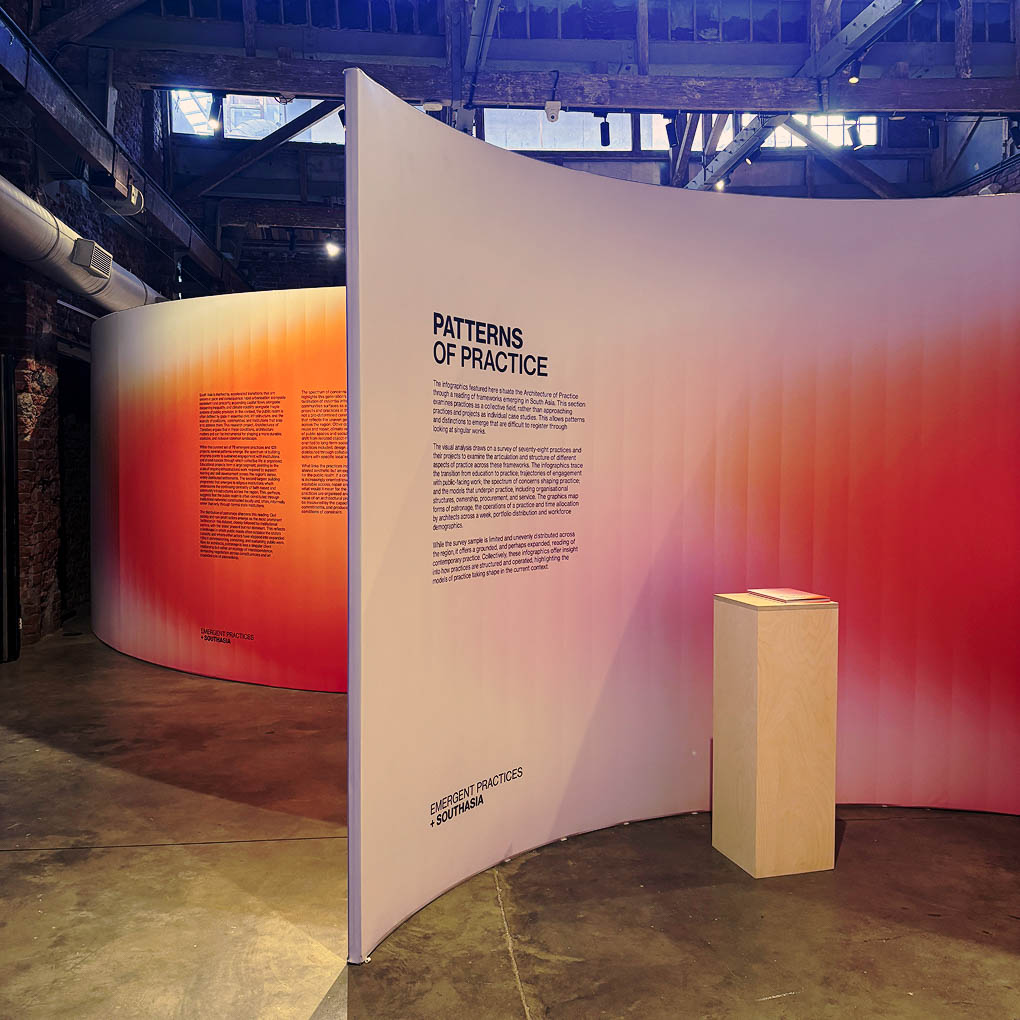
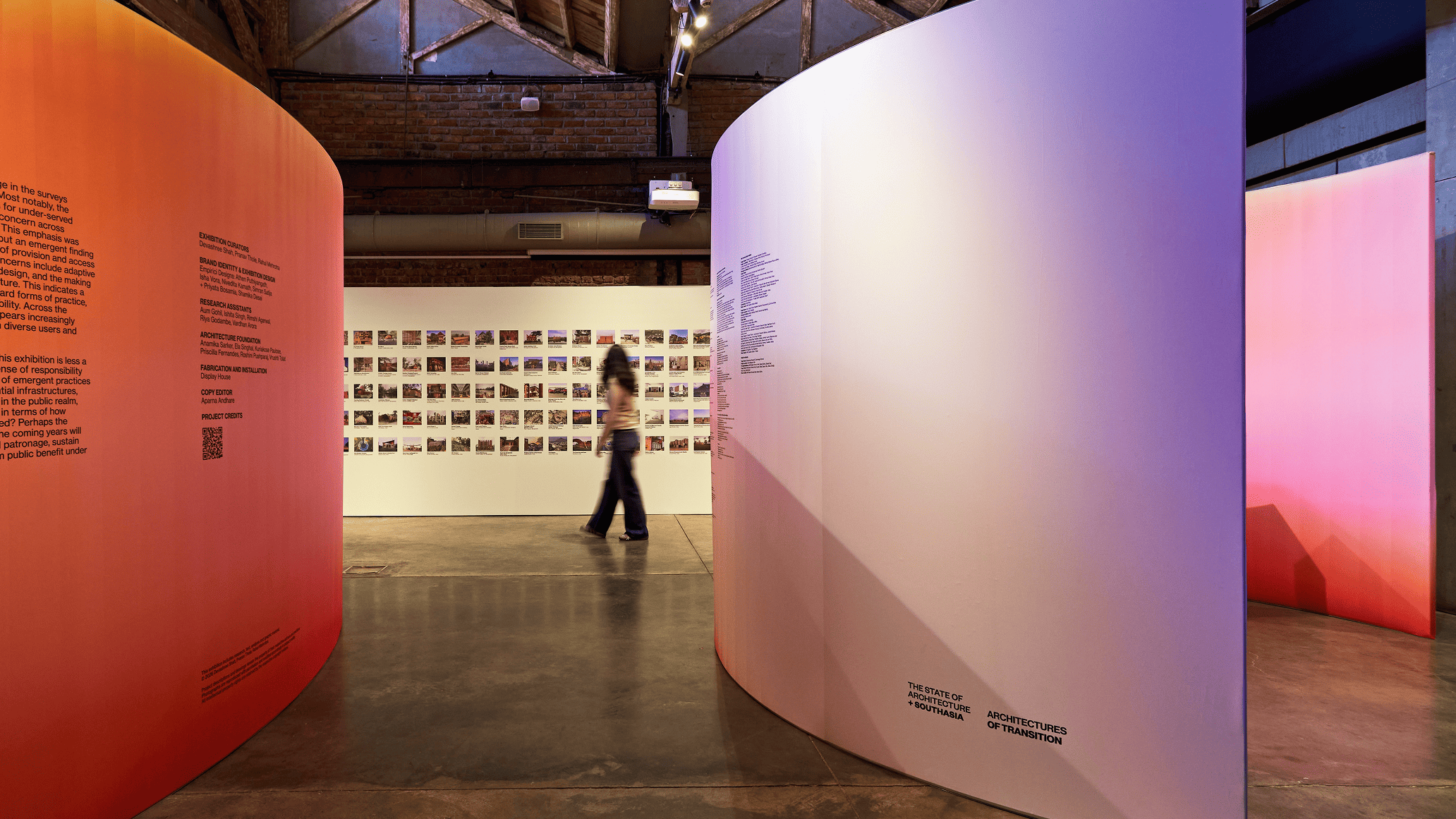
Within the exhibition space, this language did more than brand the experience — it created rhythm. The gradients moved through the industrial setting as a visual pulse, subtly guiding visitors through an unfolding narrative.
The gradient language carried over, but the palette was sharpened and elevated: more vibrant, more alive, and deliberately chosen to resonate with the word emergent.
Within the exhibition space, this language did more than brand the experience — it created rhythm. The gradients moved through the industrial setting as a visual pulse, subtly guiding visitors through an unfolding narrative.
(THE STRUCTURE)
The core design challenge wasn’t aesthetic, it was structural. How do you present research spanning 78 practices, multiple countries, layers of data and analysis, without losing people in its density?
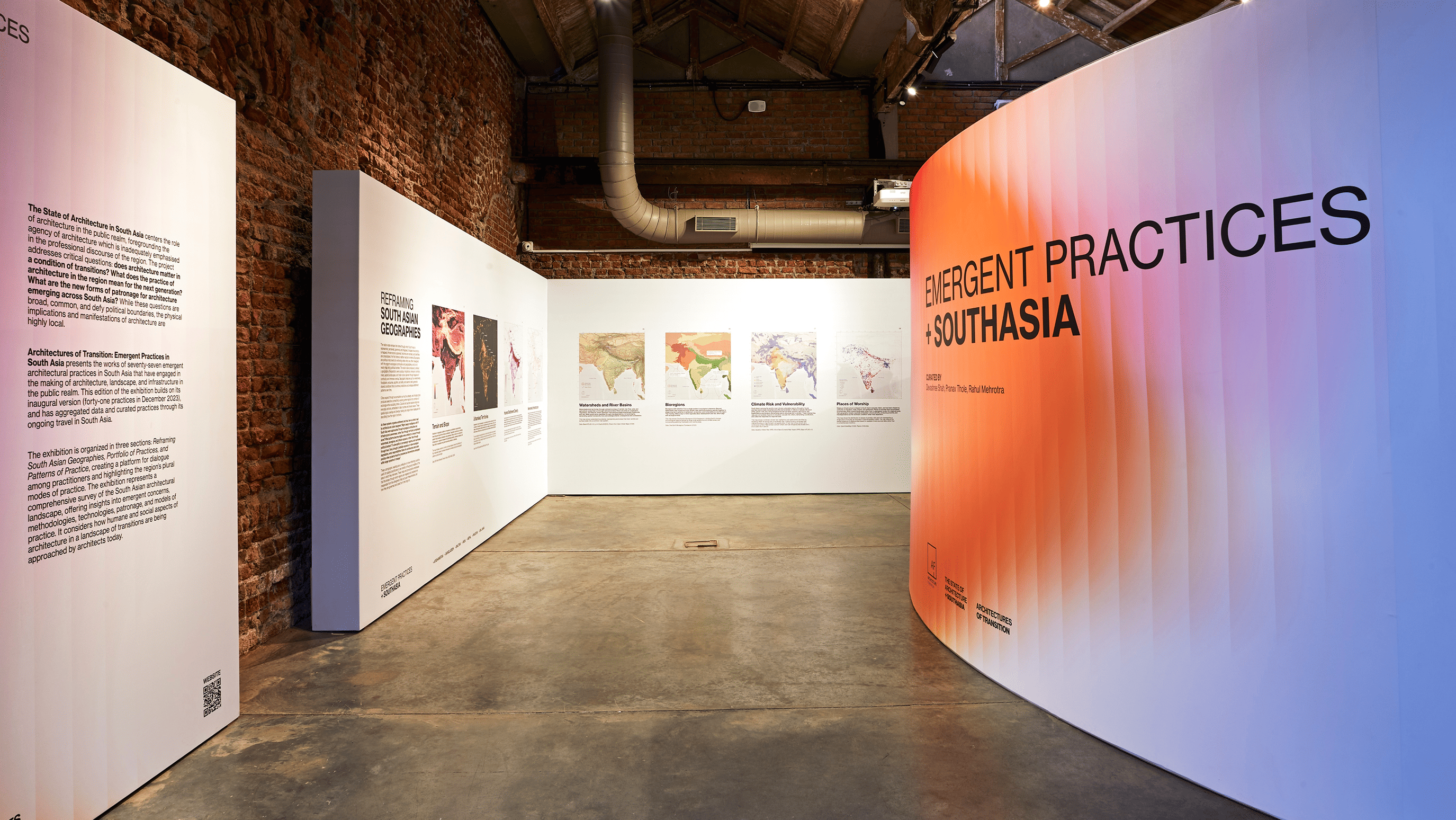
The exhibition into three distinct lenses, each with a clear role in the visitor's journey. Reframing Geographies: A contextual layer that moved beyond political boundaries to map shared regional conditions.Portfolios of Practice: The central archive presenting the work of 78 practices through a consistent system.Patterns of Practice: A synthesis layer translating research into visual insights and emerging patterns across the region.
The exhibition into three distinct lenses, each with a clear role in the visitor's journey. Reframing Geographies: A contextual layer that moved beyond political boundaries to map shared regional conditions.Portfolios of Practice: The central archive presenting the work of 78 practices through a consistent system.Patterns of Practice: A synthesis layer translating research into visual insights and emerging patterns across the region.
(THE BODY)
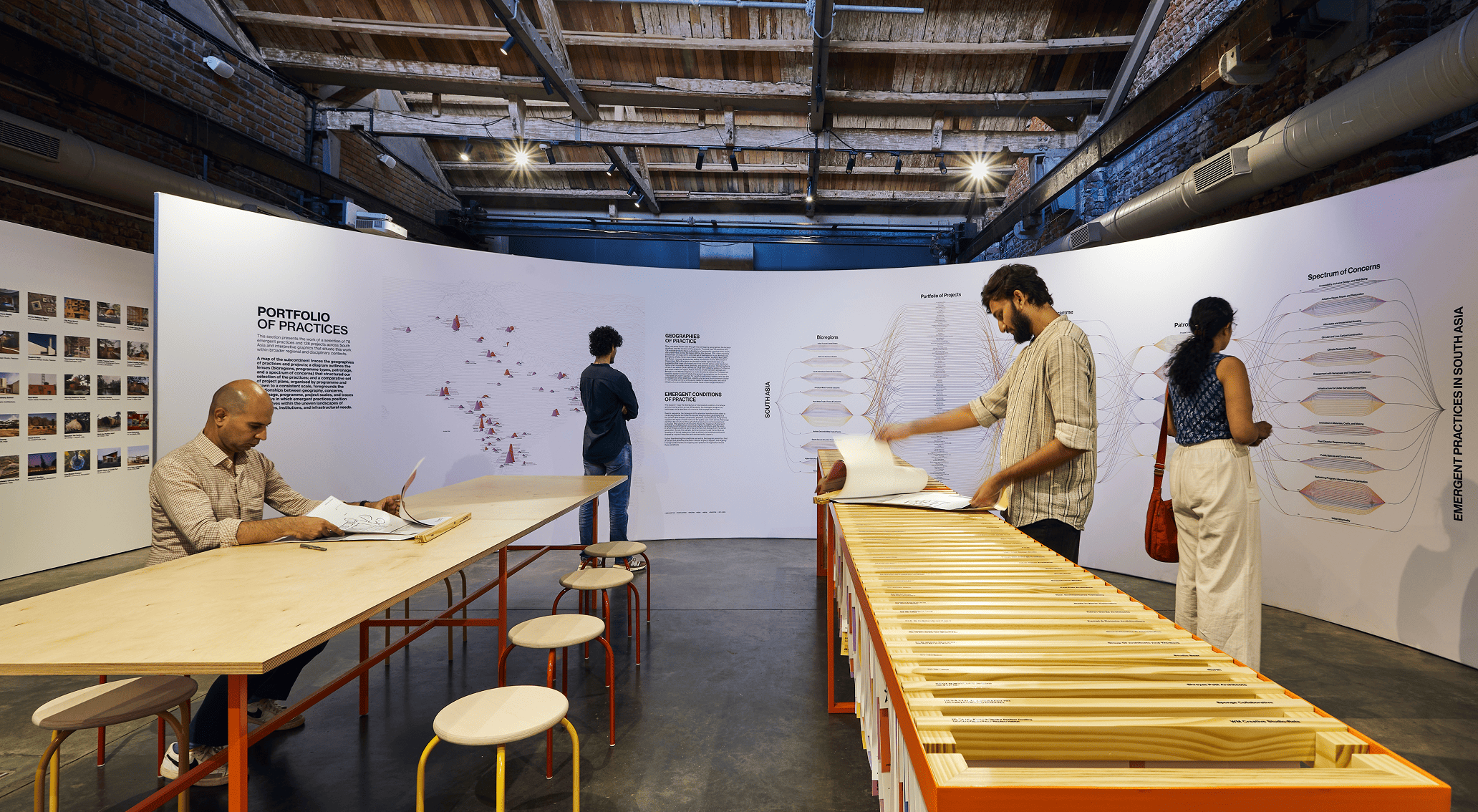
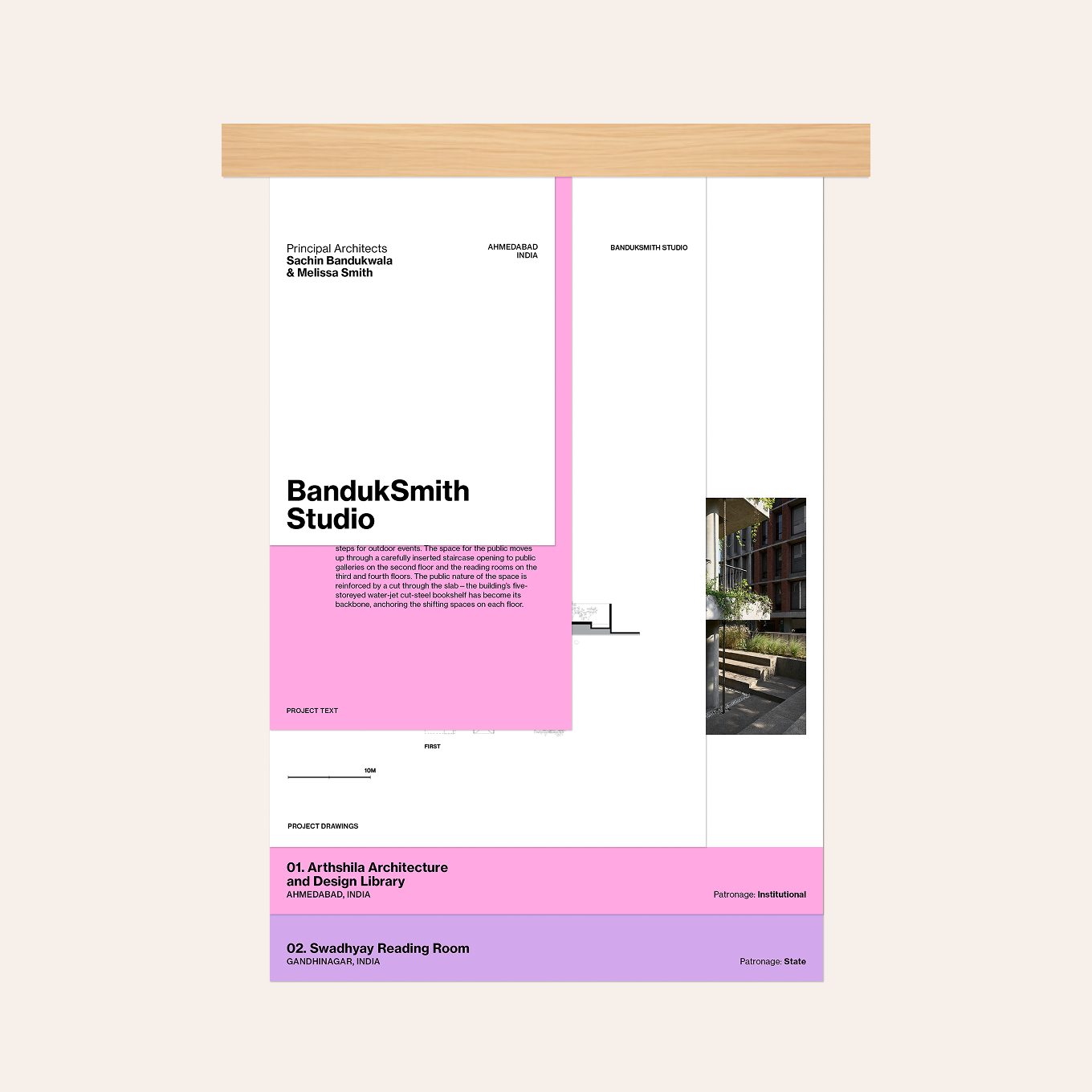
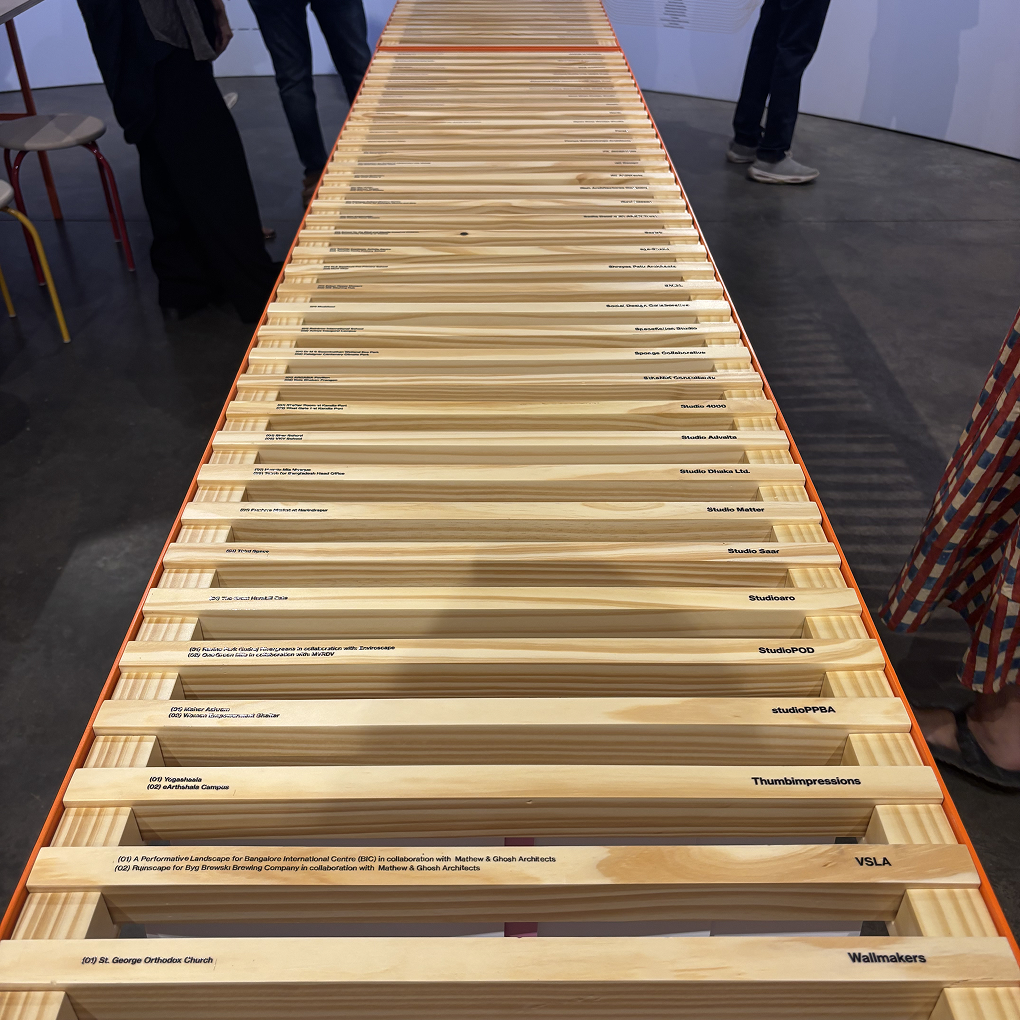
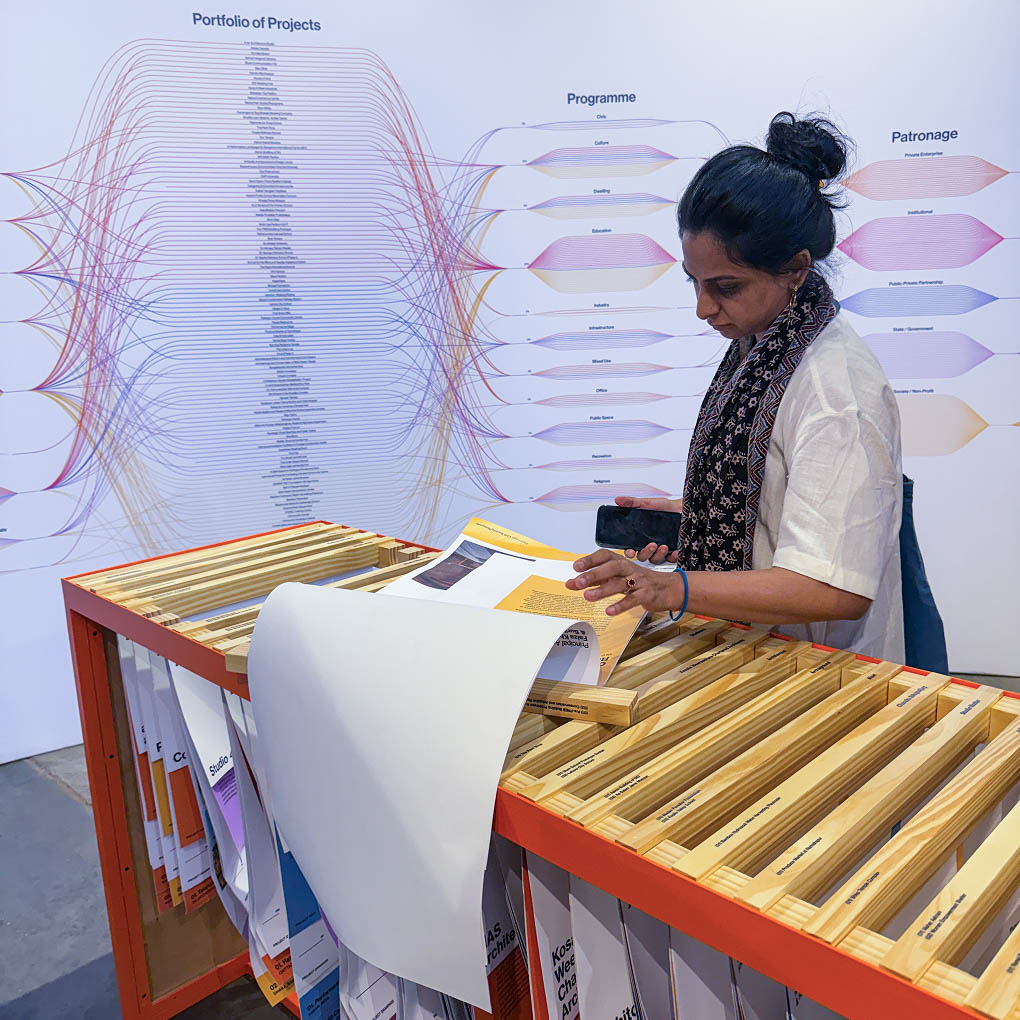
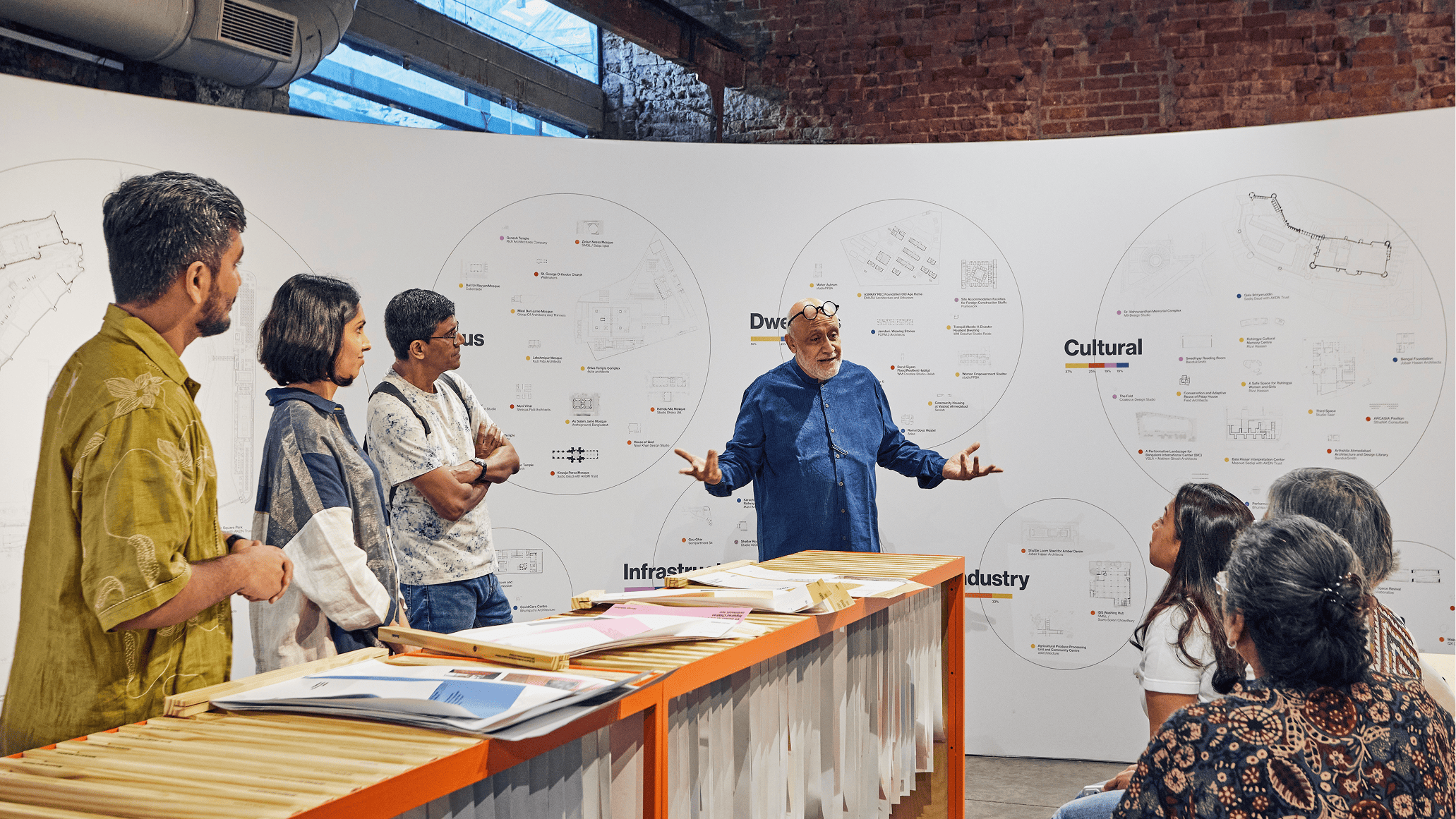
At the heart of the space sat a tactile archive of all 78 practices. Equity was a design principle: where every practice received the same structural treatment — a four-part hierarchy of introduction, project text, drawings, and imagery — so that no firm was visually subordinated to another.
(PRACTICE PANEL SYSTEM)
We designed a system that brought clarity to this complexity — structuring information consistently across all entries, and introducing a colour-coded layer based on patronage. What could have felt like an overwhelming volume of work instead became legible, allowing visitors to begin noticing patterns, filter by interest, and draw their own inferences — the design actively invited cross-comparison rather than passive consumption.
.png)
(GRID OF PROJECTS)
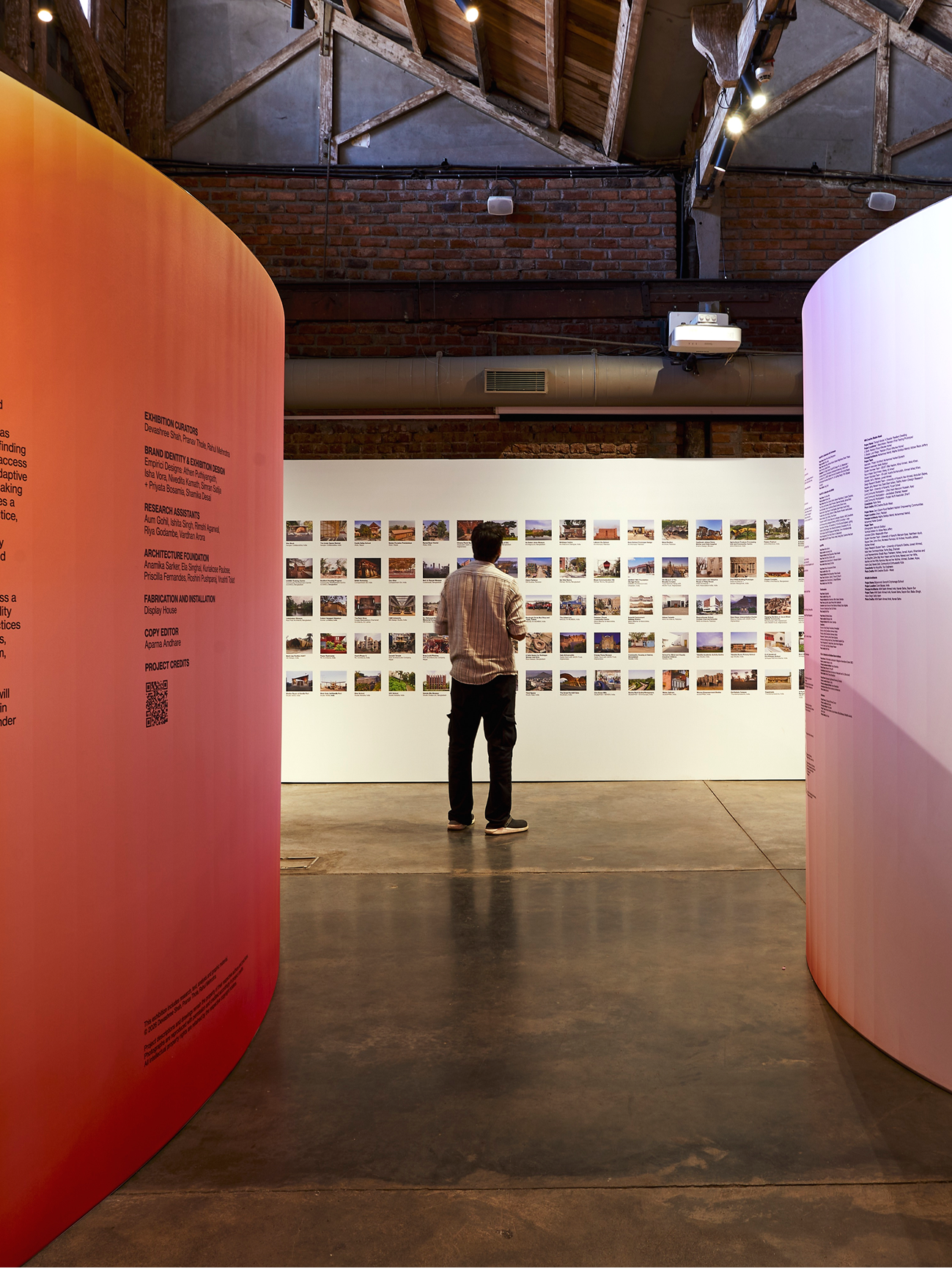
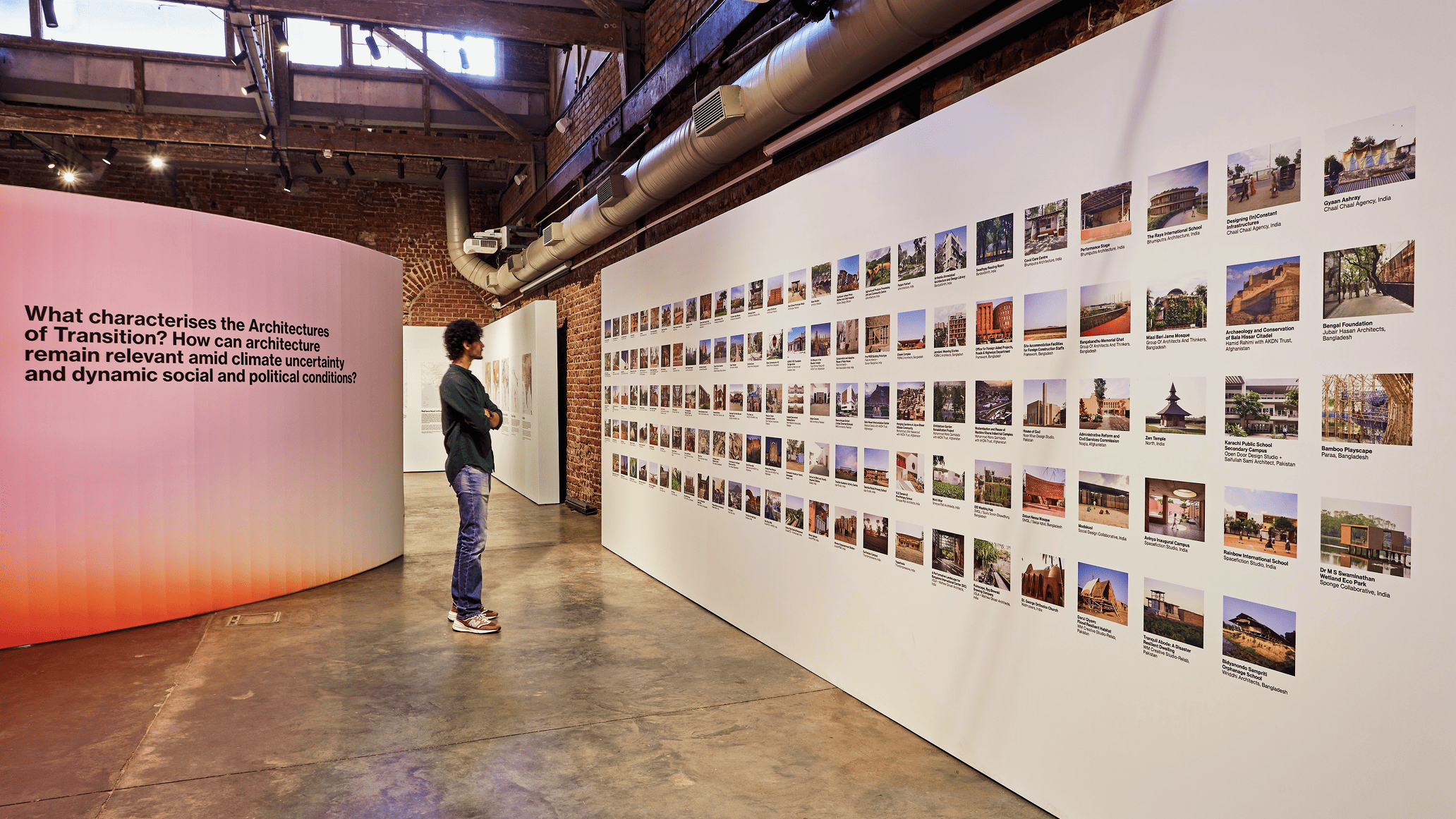
Information was structured to support two types of visitors — allowing some to move through the space quickly, while giving others the ability to pause, compare, and draw deeper inferences. This duality became central to how the experience was designed.A comprehensive grid of all 128 projects anchored this approach. It offered an immediate overview of the entire body of work, while also acting as a reference point — enabling visitors to return, locate, and revisit projects that caught their attention as they moved through the exhibition.
(THE CONCLUSION)
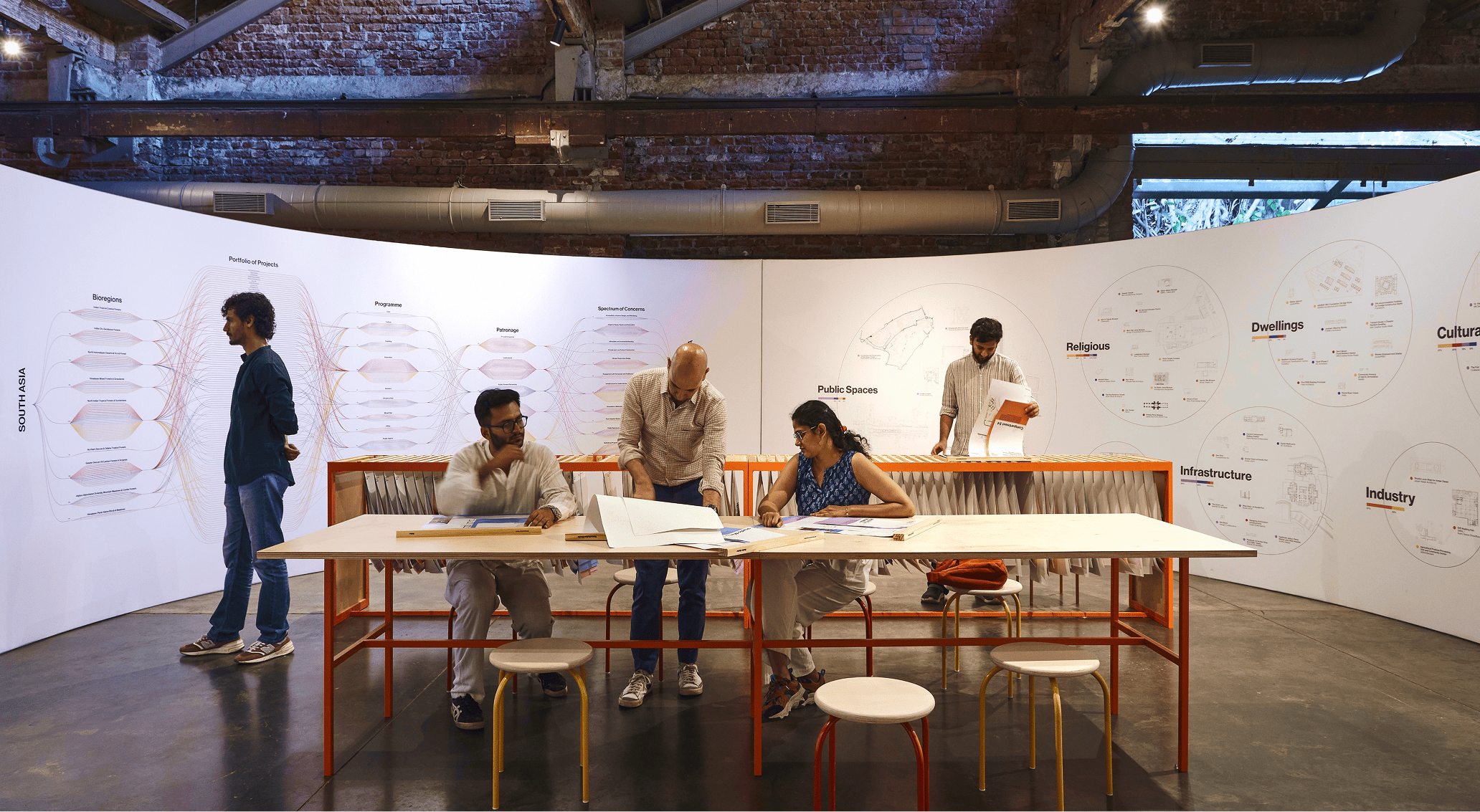
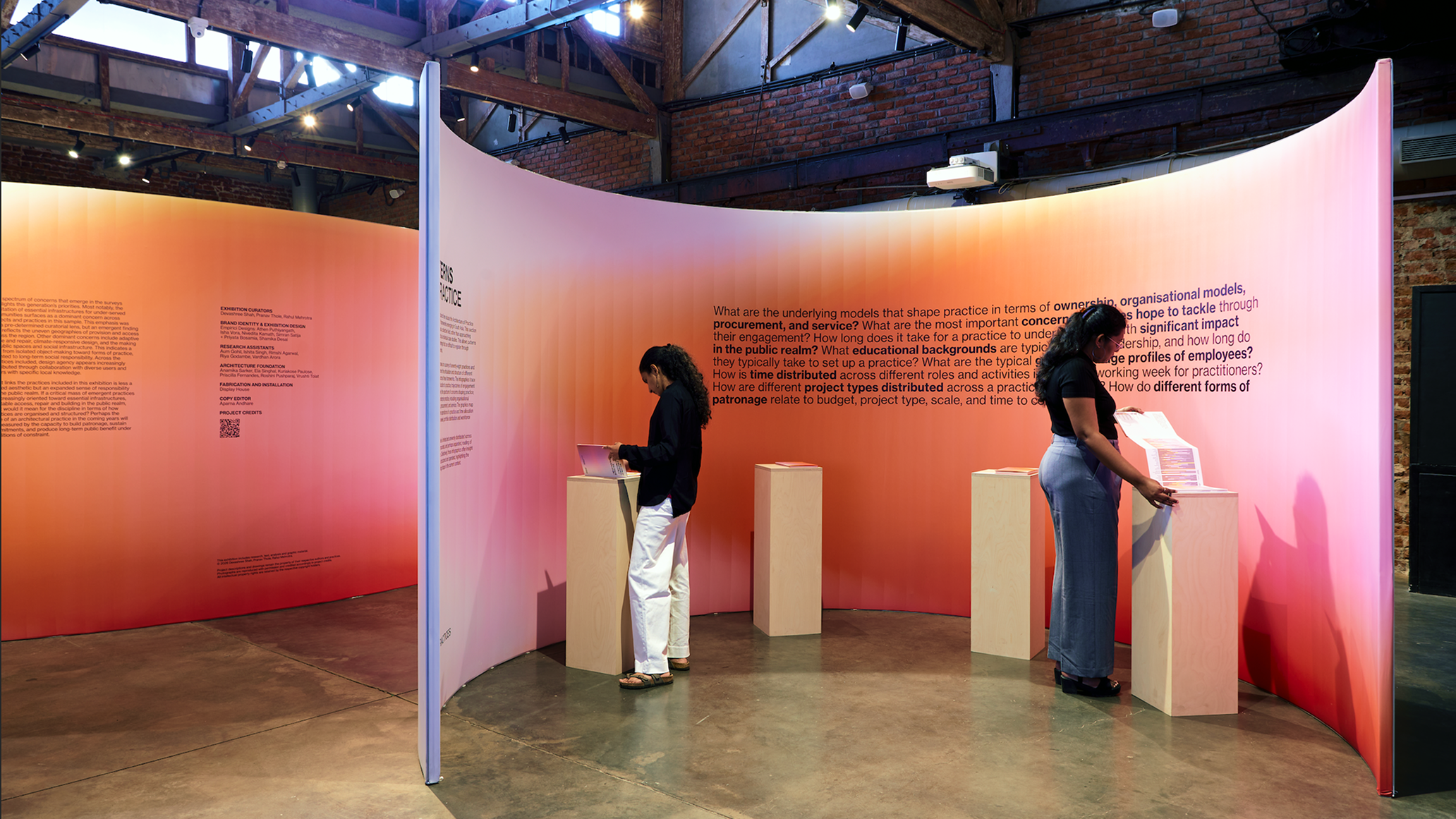
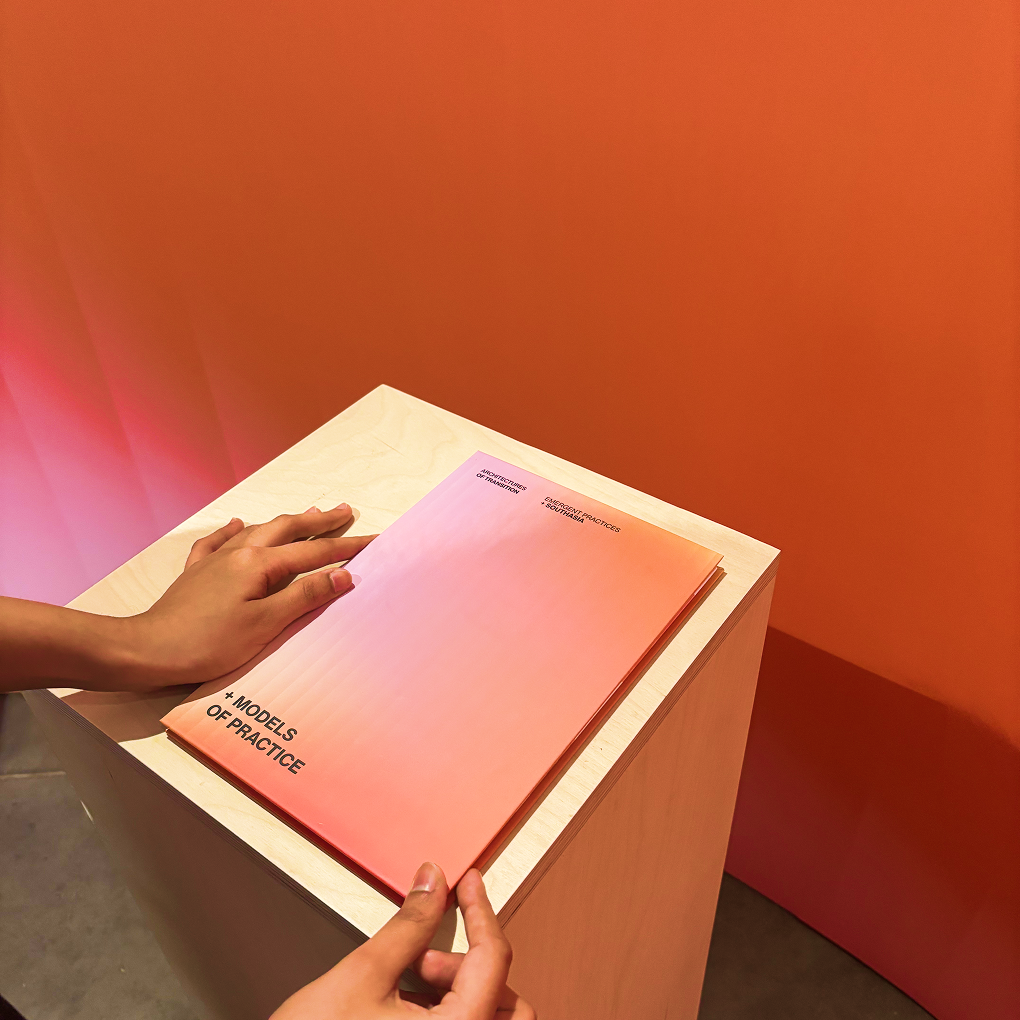
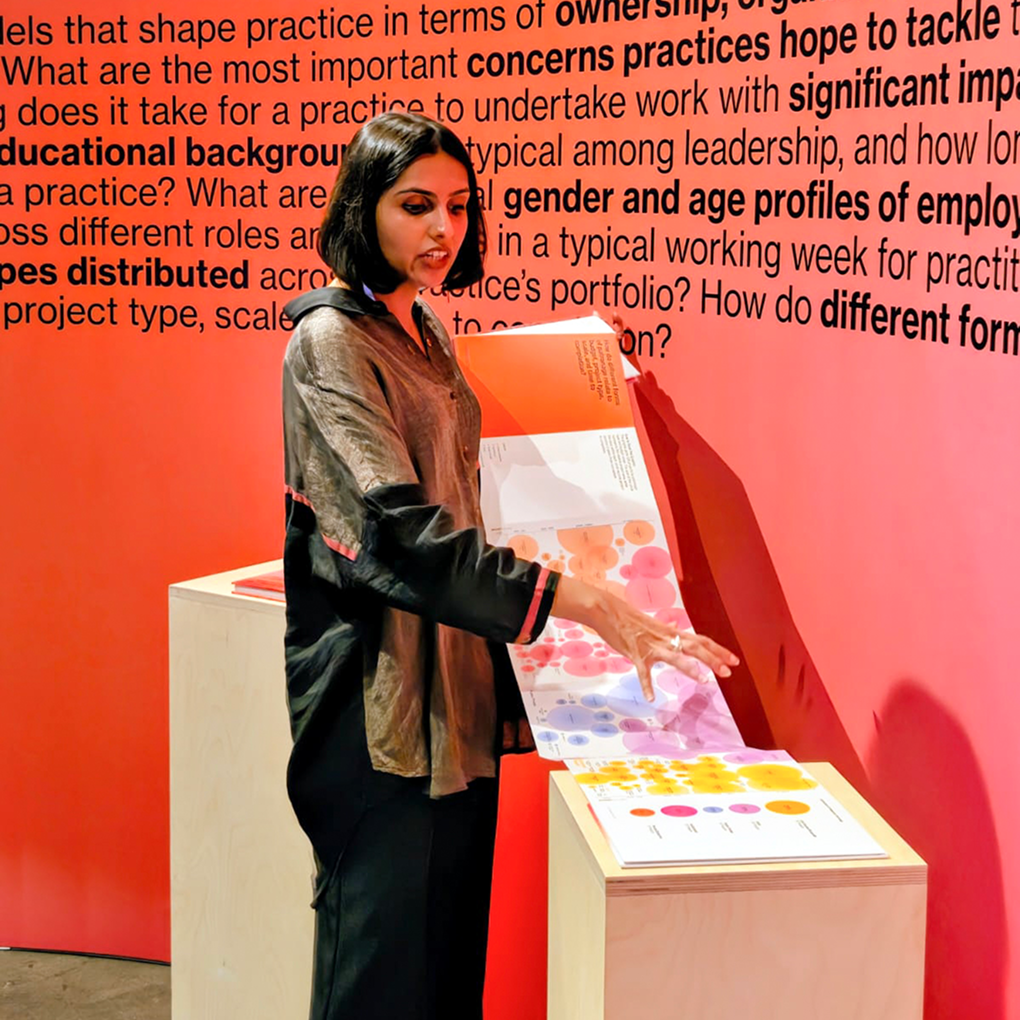
The final section shifted from showing individual practices to revealing what they collectively suggested. We designed four accordion books and an infographic animation covering Inflection Points, Models of Practice, Spectrum of Concerns, and Patronage Metrics — giving young architects not just data, but perspective.
The breakdown of the data visualisations helped carry the complexity of the research without collapsing under it. Abstract academic findings became immersive and interactive — something you could stand in front of and actually understand.
The breakdown of the data visualisations helped carry the complexity of the research without collapsing under it. Abstract academic findings became immersive and interactive — something you could stand in front of and actually understand.
(THE OUTCOME)
What emerged was not just an exhibition, but a shared space for reflection. By shaping the graphic language and structuring how information was encountered, we helped translate complex research into something people could engage with — at their own pace, in their own way.
The space invited conversation. Visitors lingered, questioned, discussed. Guided walkthroughs by the curators turned it into an active dialogue rather than a static display.
In doing so, the exhibition moved beyond presenting work — it became a living, evolving record of architectural practice in South Asia, and a lens through which its future could be imagined.
The space invited conversation. Visitors lingered, questioned, discussed. Guided walkthroughs by the curators turned it into an active dialogue rather than a static display.
In doing so, the exhibition moved beyond presenting work — it became a living, evolving record of architectural practice in South Asia, and a lens through which its future could be imagined.
CLIENT TEAM
EMPIRICI TEAM
Isha Vora (Lead)
Athen Puthiyangath
Simran Satija
NIvedita Kamath
collaborators
Priyata Bosamia (Exhibition Design)
Shamika Desai (Exhibition Design)
EMPIRICI TEAM
Isha Vora (Lead)
Athen Puthiyangath
Simran Satija
Nivedita Kamath
collaborators
Priyata Bosamia (Exhibition Design)
Shamika Desai (Exhibition Design)
CLIENT TEAM

State of Architecture in South Asia
Brand Identity / Communication / Exhibition Design

Amardeep Design
Brand Strategy / Brand Identity / Communication
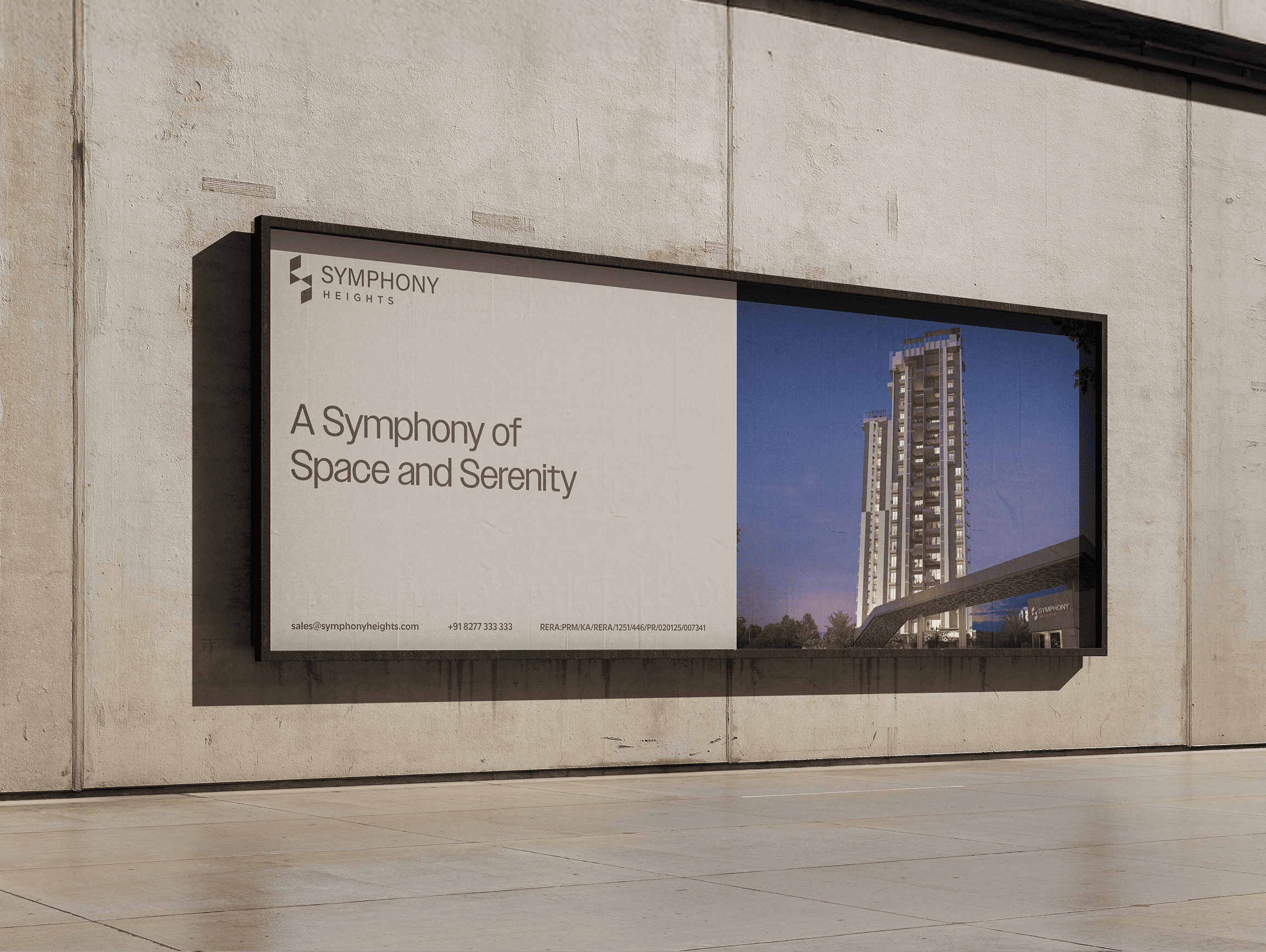
Symphony Heights
Brand Strategy / Brand Identity / Print Design / Website / Spatial Graphics
State of Architecture in South Asia
Brand Identity / Communication / Exhibition Design
Amardeep Design
Brand Strategy / Brand Identity / Communication
Symphony Heights
Brand Strategy / Brand Identity / Print Design / Website / Spatial Graphics